
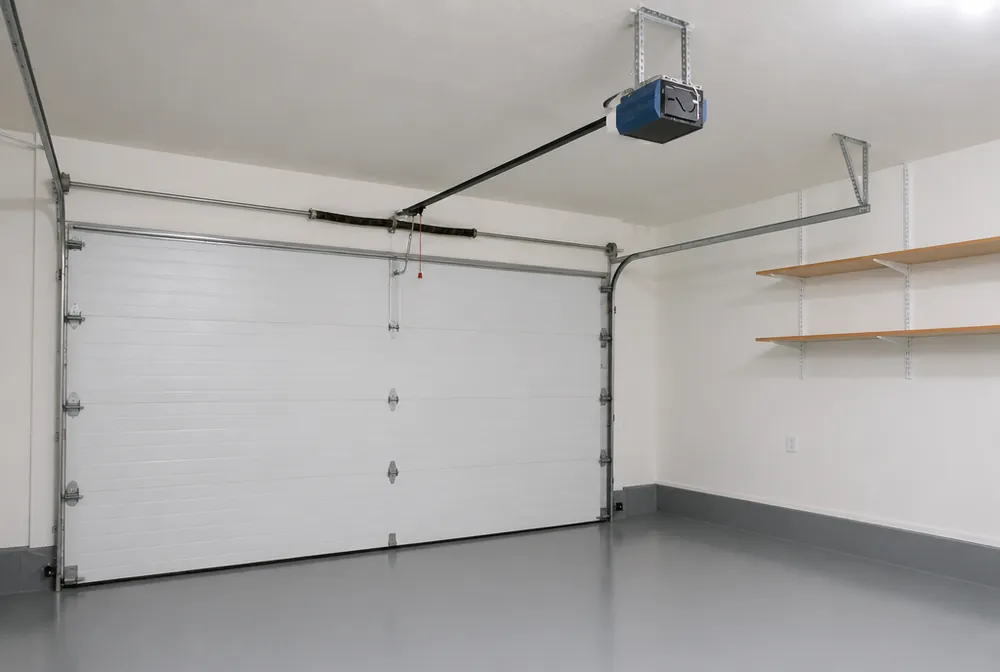
Auroras ASAP Garage Door Service repairs and installs garage door openers throughout Aurora, Denver and the south metro, seven days a week, on (303) 985-7942. The three complaints we hear most are an opener that hums without moving, one that reverses the door on a clear floor, and one that has stopped answering the remote. All three have cheap causes as often as expensive ones, so we test before we sell you a unit.
An opener is only a motor and a brain. It does not carry the door's weight, which is why an opener that suddenly struggles is usually reporting a spring or roller problem rather than having one of its own.
Opener symptoms we see every week
- The motor hums or clicks but the door does not move
- The door starts down, then reverses with nothing in the way
- The remote works from two feet away and nowhere else
- The wall button works but the remotes do not, or the reverse
- A grinding noise from the motor head, and plastic shavings on the floor below
- The light flashes a code and the door will not close
- The opener runs through its travel with the door standing still
What usually turns out to be wrong
A hum with no movement is most often a stripped drive gear in a chain-drive head, which is a repair rather than a replacement on most Chamberlain and LiftMaster units. A door that reverses on a clear floor is usually a photo-eye problem: the safety sensors near the floor on each side have been knocked out of alignment, a lens has fogged, or a wire has been pinched. On a cold Colorado morning the same symptom can come from a door dragging in stiff grease, where the opener reads the extra force as an obstruction.
Range problems are usually interference or a dying remote battery, not a failing opener. LED shop lights are a common and surprising culprit in metro garages, because cheap ones broadcast noise across the frequency the remote uses.
When a new opener is the better buy
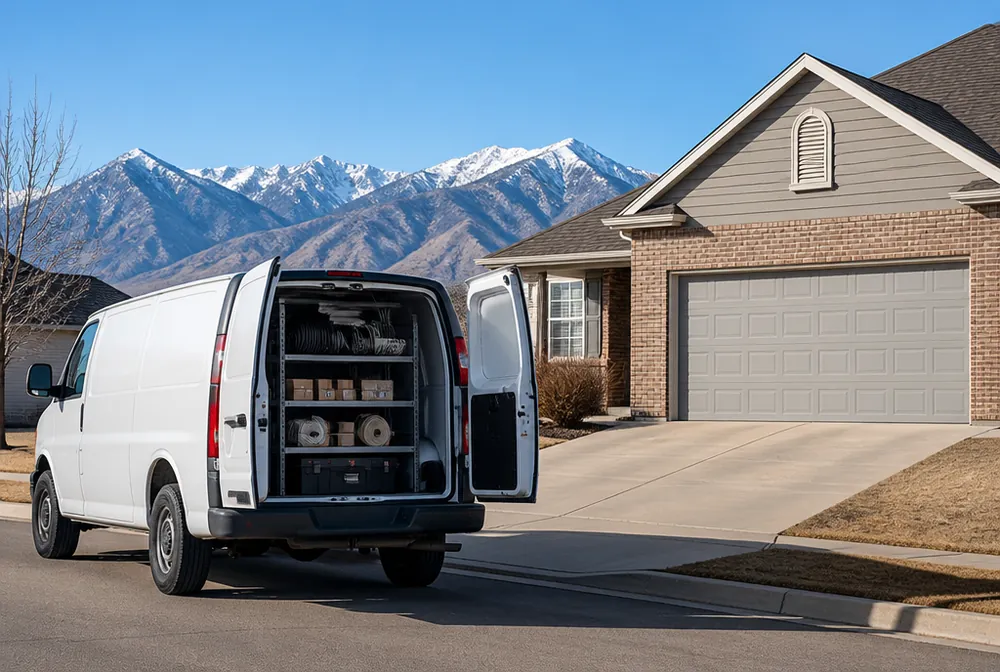
We replace rather than repair when the unit is old enough that parts are no longer made, when the logic board and the gear set have both failed, or when the opener has no photo-eyes at all. Openers manufactured before 1993 predate the federal requirement for photo-eye reversal, and a door that cannot see an obstruction is not something we will leave in service in a house with children or pets.
New units are quieter, and that matters more here than people expect: a large share of metro garages sit directly under a bedroom. A belt drive or a wall-mount jackshaft unit is dramatically quieter than the chain drive it replaces, and a wall-mount also frees the ceiling in a garage where storage is tight.
- Chain drive The workhorse. Loudest option, lowest cost, fine for a detached or unattached garage.
- Belt drive A reinforced rubber belt instead of a chain. The quiet choice when there is living space above.
- Wall mount (jackshaft) Mounts beside the torsion shaft, no rail across the ceiling. Best for high lift, low headroom or overhead storage.
- Smart features App control, camera and battery backup where you want them. We set them up on the visit, not in a callback.
Safety settings we check on every opener visit
Force settings and travel limits are the two adjustments that decide whether an opener is safe. Force set too high lets the door close on an obstruction; set too low and the door reverses all winter. We set both to the door's actual weight and balance, then run the standard reversal test with an obstruction on the floor before we leave.
We also check that the photo-eyes sit no higher than six inches off the floor, that the wall control is mounted high enough to be out of a small child's reach, and that the emergency release cord is present and reachable.
Related garage door work
- Garage Door Repair
- Garage Door Maintenance and Tune-Ups
- Garage Door Spring Repair and Replacement
- Garage Door Installation and Replacement
Not sure which one you need? That is what the call is for. See every service we run or the areas we cover.